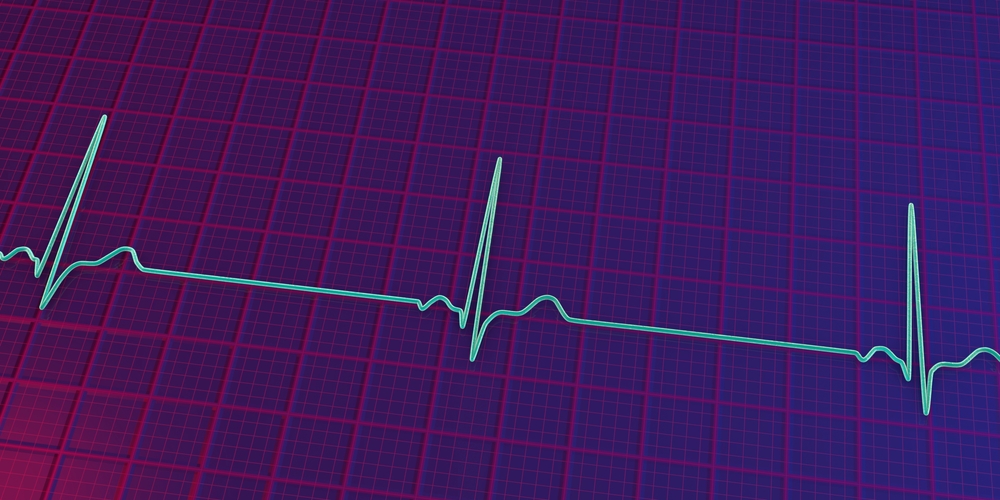
Understanding aspects of Heart Rate Variability, along with knowing how to maximize its range, is important for improving resilience and adaptability which are critical for facing life's dynamic challenges. Research strongly establishes HRV as a gateway to nervous system balance and/or re-balance with the potential for normalizing many conditions to include heart disease, hypertension, COPD, chronic stress and anxiety, depression, as well as, for optimizing athletic and/or performance in the workplace.
Important Considerations for accurately determining HRV... beyond the modern day hype and centering on the science:
The old saying : Garbage in-Garbage out" applies directly to determining one's HRV. If an individual's HRV score is to be informative, it must be measured correctly. If your device reports various HRV metrics such as RMSSD or SDNN without ensuring those measures met the minimum criteria set forth below, they are not representing HRV. Shaffer & Ginsberg (2017) provide robust guidance on this aspect in their article An Overview of Heart Rate Variability Metrics and Norms
- Breathing at one's typical rate (ie. normal breathing) for ~5 min while stationary allows for a good daily reading.
- Regardless of the measurement device being used, it must record the R-R interval (inter-beat interval) in order to accurately render important metrics such as RMSSD or SDNN that may then be sued to give one a good sense of their HRV. Be sure to check as many common day devices do not allow for this.
NOTE: There s really no need to measure your HRV daily, or even weekly, unless under unique circumstances (ie. highly competitive athlete). Otherwise, after learning what your starting number is, next steps center on strengthening your HRV!
Improving your nervous system functioning by increasing HRV:
Heart rate variability is, put simply, a stand alone indicator for disease and all cause mortality in humans. A recent meta-analysis reflect that "Lower HRV parameter values were significant predictors of higher mortality across different ages, sex, continents, populations and recording lengths" (Jarcsok et. al., 2022). From here, one may easily find more specific guidance on how increasing HRV leads to improvement across various conditions (e.g., trauma, depression, heart disease hypertension stress & anxiety).
Working to improve your HRV is fairly straightforward and in our clinic, we can typically position someone for successful ongoing training in 5 sessions or less, depending on starting point and reason for seeking training. Basics for training include:
- Ensuring that respiratory mechanics support diaphragmatic breathing
- reinforcing how respiratory chemistry plays into this process
- Through direct testing and using clinical grade equipment, Identifying an individuals unique slowed breath rate for optimizing HRV training termed as one's Resonance Frequency breath rate (typically between 6.5 and 4.5 breaths per minute).
- Confirm aspects for training are in place and fluent utilizing clinical grade equiptment.
- Pushing practice and training out into naturally occurring environments. This involves Identifying affordable wearables that are able to measure effectively and ongoing training maintenance that ensures good outcomes.
- Lastly, coordinate this therapeutic modality with others based on individual needs (ie. mental health, trauma, optimal/peak performance training)
How does it work?
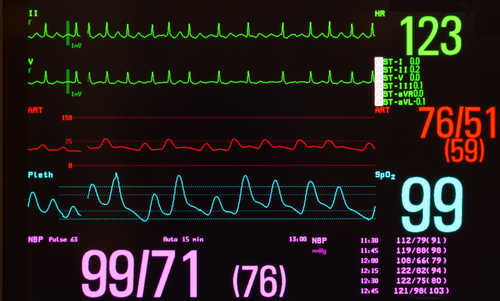
Under optimal training conditions, heart rate variability (HRV) training utilizes an ECG chest strap but where a finger or ear sensor may be used. During assessment (intial and ongoing), the sensor detects ongoing variations in one's heart rate by measuring the distance between successive heart beats (R-R interval) that when averaged, are used to render various metrics. RMSSD (root mean square standard deviation) is a very important metric but is only informative if measured under specific conditions (ie. seated upright without talking for at least 5 minutes using the R-R difference for calculation).
During training, the metrics used to inform within session strength and progress shifts to include the level of repertory sinus arrhythmia occurring and displayed on the training screen as well as overall peak power. As an individual slows down their breathing pattern their heart rhythm and breathing rhythm become synchronized. This equates to purposefully exercising one's heart resulting in a healthier emotional and physiological state. This synchronization is referred to as Respiratory Sinus Arrhythmia or RSA. Overtime, improved/high-HRV positively correlates with the ability to respond more effectively to stressful situations and adapt to them more efficiently. This supported mind-body relationship improves overall self-management and response. This shift in heart rhythms creates a favorable cascade of neuronal, hormonal, and biochemical events that benefit the entire body. Blood pressure drops. Stress hormones plummet. The immune system pumps up. Anti-aging hormones increase. You gain clarity, calmness, and control.
HRV for training peak/optimal performance
HRV training is well established as a tool for improving an individual peak athletic performance as well as optimizing performance at work. Remember...., adaptability and resilience are factored in to every response we make across situations. See on our website Peak & Optimal Performance Training
Citations: Jarczok MN, Weimer K, Braun C, Williams DP, Thayer JF, Gündel HO, Balint EM. Heart rate variability in the prediction of mortality: A systematic review and meta-analysis of healthy and patient populations. Neurosci Biobehav Rev. 2022 Dec;143:104907. doi: 10.1016/j.neubiorev.2022.104907. Epub 2022 Oct 13. PMID: 36243195.